

For an importer, feed mill or pet-food brand, “dried mealworms” is not a complete purchasing specification. Two batches can look similar in a product photograph yet behave differently in storage, grinding, mixing and final feeding. A useful supplier discussion therefore begins with the intended species, product form and distribution conditions, then works backward to moisture, particle integrity, microbiological control, packaging and documents.
Greenfut presents itself as a China-based full-chain mealworm supplier covering breeding, processing and export. Its product page lists whole dried mealworms, mealworm protein powder and insect frass fertilizer. That range is commercially relevant because a bird-feed packer, a formulated pet-food producer and an agricultural buyer do not need the same material. Buyers evaluating Greenfut dried mealworms should resist the temptation to compare only the headline protein figure or price per tonne.
Whole dried mealworms and mealworm powder solve different problems
Whole dried mealworms retain the visible shape consumers recognise. That makes them suitable for products where appearance, natural-feeding behaviour and piece integrity matter, including wild-bird mixes, poultry treats and selected exotic-pet products. A retail pack with broken insects and excessive powder may still contain protein, but it will not deliver the same shelf appearance or consumer experience.
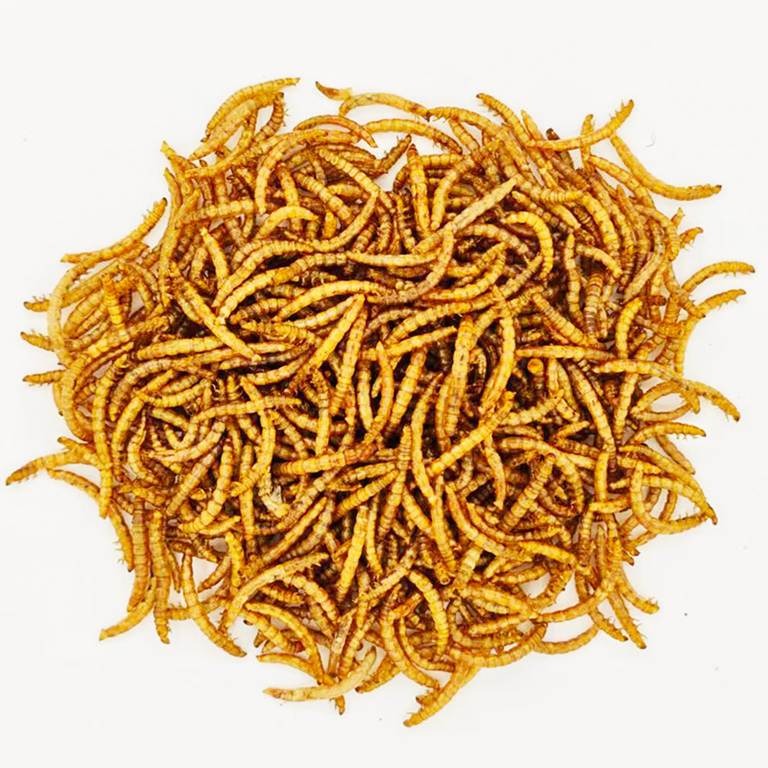
Whole dried mealworms need both nutritional consistency and acceptable piece integrity for retail and feed applications.
Mealworm protein powder is easier to meter into a formulated feed, premix or nutritional product. Here, visual wholeness matters less than grind size, flowability, mixing behaviour and consistent nutrient analysis. Powder can expose more surface area to air and moisture, so the packaging and storage plan may need to be stricter. It is also important to clarify whether the quoted powder is simply milled whole mealworm or has undergone additional processing, because those are not automatically equivalent ingredients.
The correct choice is application-led. A bird-feed brand may value recognisable whole insects and low breakage. A manufacturer running automated dosing equipment may prefer a controlled particle range. A customer developing a complete diet must evaluate how the ingredient fits the whole formulation rather than treating mealworms as a standalone nutritional answer.
Protein percentage is only one line on the specification
Greenfut’s product page states 50–54% protein and moisture of no more than 6% for its premium dried mealworms. Those figures are useful screening points, but a purchase specification should state the analytical basis and permitted variation. Protein measured “as is” and protein reported on a dry-matter basis are not the same number. Buyers should also ask which test method is used and whether the same method will appear on each batch certificate of analysis.
Depending on the destination and intended feed, other relevant values may include fat, fibre, ash and selected minerals. For formulation work, amino-acid data can be more informative than crude protein alone. For retail whole mealworms, count, size distribution, colour, odour and percentage of broken pieces or fines can also affect acceptance. A product should not pass a commercial inspection merely because one nutrient result meets the target.
Low moisture helps shelf life, but does not replace process control
Drying reduces water available for microbial growth and makes transport more practical. It does not mean that any dry-looking insect is automatically stable. The drying profile, post-drying handling, cooling conditions and exposure before packing all influence the finished batch. If warm product is sealed too early, condensation risk can undermine an otherwise low moisture result.
Ask how moisture is measured, how frequently it is checked and what happens when a batch is near the upper limit. Water activity may also be useful in shelf-life assessment because it describes available water rather than total moisture alone. The appropriate acceptance values and tests should be agreed by qualified feed specialists for the actual market and product.
Quality control should be visible at batch level
The website says every batch is tested and describes controlled breeding, harvesting and low-temperature drying. A serious importer should translate those statements into records. Request a representative certificate of analysis, testing scope, batch coding format and traceability route from finished product back to production. If third-party laboratory results are needed for a destination market or major customer, agree who commissions them, which methods apply and who bears the cost of a failed result.
Microbiological and contaminant requirements depend on use and jurisdiction, so a universal checklist would be misleading. Common discussion areas can include total viable counts, relevant pathogens, heavy metals, pesticide residues, mycotoxins and foreign material. The buyer’s own regulatory adviser or feed-safety team should define the necessary limits. The supplier can then confirm whether routine controls and test frequency meet that specification.
Certifications are evidence to verify, not logos to assume
Greenfut states that its facility supports FDA, HACCP and ISO 22000-related cooperation. Before relying on a certification claim, request the current certificate, issuing body, validity dates, exact legal entity, facility address and covered product scope. A certificate can be genuine yet not cover the material, factory or activity in the proposed transaction. Verification is a normal procurement step, not an accusation.
The same principle applies to export documentation. A supplier’s experience in one country does not automatically establish eligibility in another. Product classification, feed registration, animal-origin rules, health certificates, treatment declarations and labelling can vary. Confirm the destination requirements before production, especially when a shipment will be repacked or used in a formulated pet food.
Packaging must match the route to market
Whole dried mealworms are light and can be crushed by compression and repeated handling. Protein powder can leak through unsuitable seams or absorb moisture after opening. For bulk orders of mealworm feed products, buyers should specify inner liner material, outer bag or carton, net weight, sealing method, pallet pattern and maximum stacking conditions rather than accepting “export packing” as a complete answer.
Retail-ready customers may also need private-label artwork, lot codes, best-before format, country-of-origin wording and language compliance. Ask for photographs of the exact proposed pack and a pre-production sample. When the route includes humid ports, long sea transit or warehouse temperature swings, packaging trials and container-loading practices deserve as much attention as the nutrition panel.
Storage instructions should state a realistic temperature and humidity range, whether opened bags need resealing, and how stock should be rotated. Pest-control procedures matter because an insect-based feed ingredient can still be exposed to storage pests. Shelf-life claims should be supported by the chosen product form and packaging, not copied from a different SKU.
Species and use case determine the final suitability
The Greenfut page lists bird feed, pet food and reptile nutrition among possible applications. That does not mean the same inclusion rate or feeding pattern is appropriate for every bird, reptile or small animal. Whole mealworms are calorie-dense and can be high in fat relative to some staple diets. The nutritional role may range from occasional enrichment to an ingredient in a professionally balanced formulation.
Brands should avoid turning a supplier article into feeding advice for all animals. Use a qualified animal nutritionist or veterinarian where required, account for life stage and species, and make sure consumer labels explain the product’s intended role. A natural-looking ingredient is not automatically a complete feed.
A sample order should test the real production standard
A small sample is useful only when it is traceable to the process that will supply the commercial order. Ask whether the sample comes from normal production, record its batch number, and compare its certificate with the delivered lot. Evaluate odour, colour, breakage, fines, foreign material, pack seal and the way the product behaves after a realistic period of storage.
For powder, test flow and mixing in the buyer’s own equipment. For whole mealworms, test how the product survives packing, transport and retail handling. If colour or insect size is commercially important, define an acceptable reference range with photographs or retained samples. Written tolerances are more dependable than “same as sample” when biological raw materials naturally vary.
The strongest supplier is the one that can hold a specification
Scale and sustainability claims may help a buyer shortlist a yellow mealworm manufacturer in China, but repeatability closes the gap between a promising sample and a dependable ingredient. The decisive evidence is whether the supplier can explain the process, provide current documents, trace each batch and respond to deviations without changing the story.
A sound enquiry should therefore include the species or product application, required form, expected annual volume, destination country, packaging, target analysis and testing expectations. That information allows Greenfut or any competing supplier to quote the same scope. It also prevents a low initial price from hiding the later cost of repacking, rejected documents, excessive breakage or reformulation. In export feed ingredients, a stable specification is more valuable than a broad claim of high protein.
