


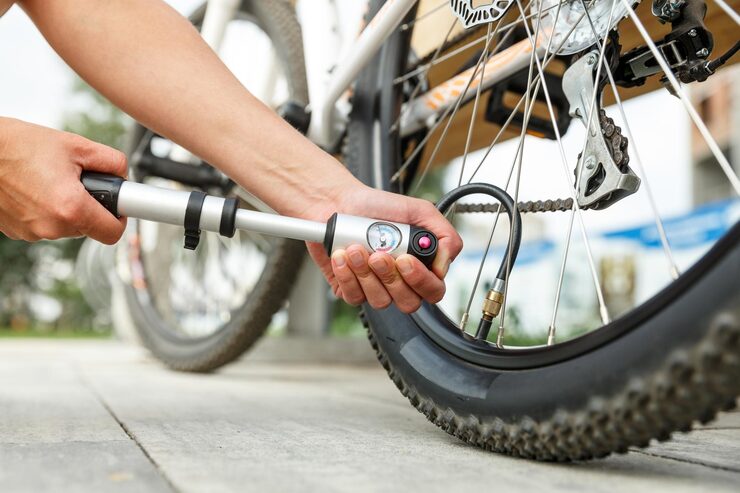
Getting your tire pressure right can be the difference between a smooth, efficient ride and one that leaves you exhausted and uncomfortable. Many cyclists overlook this crucial aspect of bike setup, yet it impacts everything from speed and handling to comfort and puncture resistance.
Why Tire Pressure Matters More Than You Think
Tire pressure affects how your bike interacts with the road surface. Too high, and you’ll bounce over every imperfection, losing traction and wasting energy. Too low, and you risk pinch flats while creating excessive rolling resistance that slows you down.
The right pressure creates an optimal contact patch with the road, balancing speed, grip, and comfort. Professional cyclists spend considerable time dialing in their tire pressure for race day conditions, and recreational riders can benefit from the same attention to detail.
Factors That Influence Your Ideal Pressure
Rider Weight
Heavier riders need more pressure to prevent the tire from compressing excessively, while lighter riders can run lower pressures. Your weight is the primary factor in determining baseline pressure.
Tire Width
Wider tires can run at lower pressures than narrow ones. A 25mm tire requires significantly more pressure than a 32mm tire to achieve the same performance characteristics. The trend in recent years has moved toward wider tires at lower pressures for improved comfort without sacrificing speed.
Road Conditions
Smooth pavement allows for higher pressures, maximizing speed. Rough or wet roads demand lower pressures for better grip and shock absorption. Adjust your pressure based on where you’ll be riding.
Riding Style
Aggressive cornering and sprinting benefit from slightly higher pressures for responsive handling. Endurance riders prioritizing comfort over long distances may prefer pressures on the lower end of the recommended range.
Traditional Pressure Guidelines
Conventional wisdom suggests starting points based on tire width:
- 23mm tires: 110-120 PSI
- 25mm tires: 90-100 PSI
- 28mm tires: 80-90 PSI
- 32mm tires: 65-75 PSI
However, these are rough estimates. Modern research shows that many cyclists have been running pressures too high for optimal performance.
The Science of Optimal Pressure
Recent studies have revealed that lower pressures often provide better performance than previously thought. The key is finding the sweet spot where the tire conforms to road irregularities without excessive deformation.
When a tire hits a bump at too high a pressure, it bounces upward, requiring the rider to push the bike back down. This vertical movement wastes energy that could propel you forward. Lower pressures allow the tire to absorb impacts, maintaining forward momentum.
Using Advanced Calculation Methods
While general guidelines provide a starting point, precision matters for optimal performance. The SILCA Tire Pressure Calculator represents one of the most sophisticated approaches to determining ideal pressure. Developed through extensive testing and data analysis, it considers multiple variables including rider weight, tire size, rim width, and road conditions to provide personalized recommendations.
This tool eliminates guesswork by applying scientific principles to your specific setup. It accounts for how different factors interact, something simple charts cannot capture.
Front vs Rear Pressure Differential
Your weight distribution isn’t equal between wheels. Most riders carry 40-45% of their weight on the front wheel and 55-60% on the rear. This means your rear tire should run 5-10 PSI higher than the front.
Running different pressures front and rear optimizes handling and comfort. The front tire needs slightly lower pressure for better steering feel and road feedback, while the rear needs more support for the greater load.
Tubeless Considerations
Tubeless setups allow running lower pressures than traditional clincher tires with tubes. Without the risk of pinch flats, you can drop pressure by 10-15 PSI, gaining traction and comfort while maintaining puncture protection from sealant.
The rim and tire combination matters significantly with tubeless. Modern hookless rims have maximum pressure limits, typically around 72 PSI, that must be respected regardless of other factors.
Checking and Adjusting Pressure
Tire pressure isn’t set and forget. Temperature changes affect pressure significantly. A 20-degree temperature swing can change pressure by 10 PSI or more. Check pressure before every ride.
Use a quality floor pump with an accurate gauge. Digital gauges provide the most precision. Handheld gauges can work but verify accuracy periodically against a known standard.
Real World Testing
Once you have a calculated starting point, fine-tune through experimentation. Try pressures 5 PSI above and below your baseline on familiar routes. Pay attention to how the bike feels over rough sections, in corners, and during hard efforts.
Keep notes on different pressure settings and conditions. Over time, you’ll develop intuition for optimal pressure in various scenarios.
Common Pressure Mistakes
Running too high based on maximum sidewall ratings. The maximum pressure printed on tires represents a safety limit, not a recommendation. Optimal pressure is usually well below maximum.
Ignoring seasonal changes. Winter conditions often benefit from slightly lower pressures for better grip on cold, sometimes damp roads. Summer may allow higher pressures on smooth, dry pavement.
Setting and forgetting. Tires naturally lose pressure over time, typically 1-2 PSI per day for high-pressure road setups. Check regularly.
Copying someone else’s pressure. What works for your riding partner may not work for you. Individual factors matter too much for one-size-fits-all recommendations.
Advanced Optimization Strategies
Serious cyclists can take pressure optimization further by adjusting for specific events. Time trials might use slightly higher pressures for maximum speed on smooth courses. Gran fondos over rough roads benefit from lower pressures to reduce fatigue.
Track your performance data alongside pressure settings. Power meter data can reveal whether pressure changes affect your efficiency. Heart rate patterns may show reduced stress at optimal pressures.
The Bottom Line
Proper tire pressure is free speed and comfort. Investing time to find your optimal settings pays immediate dividends in ride quality and performance. Start with scientific calculations, then refine through testing.
Don’t fall into the trap of running excessive pressure based on outdated assumptions. Modern understanding shows that lower, optimized pressures often outperform the rock-hard tires of the past.
Take the time to dial in your setup. Your legs will thank you on every ride, and you might be surprised at how much better your bike can perform with this simple adjustment.