

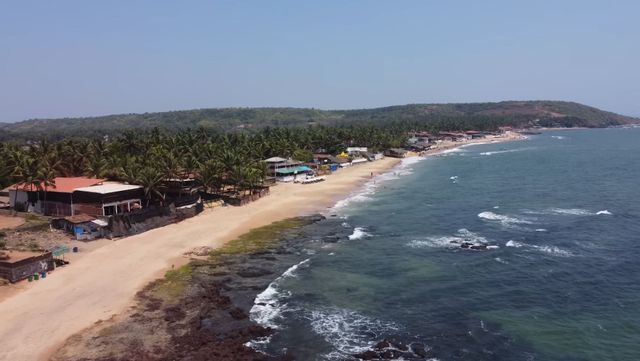
Located on the western coast of India, Goa combines coastal landscapes with a layered cultural history shaped by centuries of trade, religion, and colonial influence. While the region is widely associated with beaches, Goa also offers architectural monuments, protected natural sites, and historic forts that provide a broader understanding of its identity.
Below are five destinations that represent this diversity and can be combined into a structured itinerary.
Old Goa: Religious Architecture and Colonial Heritage
Old Goa functioned as the capital of Portuguese India until the 18th century and remains the most concentrated area of historical architecture in the region. The Basilica of Bom Jesus, a UNESCO World Heritage Site, is known for housing the relics of St. Francis Xavier and for its baroque design adapted to tropical conditions.
Nearby structures such as Sé Cathedral and the Church of St. Francis of Assisi create a compact architectural ensemble. The area allows visitors to examine how European religious forms were integrated into the Indian context through materials, scale, and ornamentation.
Dudhsagar Falls: Protected Landscape of the Western Ghats
The Dudhsagar Falls is one of the tallest waterfalls in India and lies within the Bhagwan Mahavir Wildlife Sanctuary. The four-tier cascade becomes particularly prominent during the monsoon season, when water volume increases and the surrounding forest shows high biological activity.
Access routes include forest tracks and regulated jeep transfers. The site illustrates the ecological importance of the Western Ghats, a recognized biodiversity hotspot, and provides contrast to Goa’s coastal geography.
Fort Aguada: Strategic Military Architecture
Constructed in the early 17th century, Fort Aguada served as a defensive structure protecting shipping lanes and as a freshwater reservoir for passing vessels. The fort’s later-added lighthouse remains one of the oldest in Asia.
Positioned above the Arabian Sea, the site provides insight into maritime security strategies used during the colonial period, as well as panoramic views that clarify why this location was militarily significant.
Anjuna Beach: Cultural and Social Transformation
Anjuna Beach gained international recognition during the late 20th century as part of Goa’s alternative travel movement. Today, the beach is known for its weekly flea market, rocky shoreline, and blend of local and international influences.
Beyond recreation, Anjuna reflects how tourism reshaped Goa’s coastal communities, infrastructure, and economic priorities, making it a relevant case study in regional development.
Spice Plantations: Agricultural and Culinary Context
Inland Goa hosts multiple spice plantations near Ponda, where visitors can observe the cultivation of pepper, cardamom, nutmeg, and cinnamon. Guided tours explain irrigation methods, soil management, and the role of spices in Goan cuisine and export history.
This experience connects agricultural practice with daily life and provides context for flavors commonly found in local dishes. Many travelers include such visits while planning routes with services like car rental in AnyRentCars, which simplify access to non-coastal locations.
Transportation and Route Planning in Goa
Goa’s road network allows flexible movement between coastal areas, heritage sites, and inland reserves. Distances between key locations remain manageable within a single day, which supports independent itinerary planning.
For this reason, the region is practical to explore on foot in cities and by road between destinations, including via taxis or car rental in India, particularly for travelers aiming to cover multiple landmarks efficiently within limited time.
Goa offers more than a single narrative. Churches, waterfalls, forts, beaches, and agricultural landscapes together form a coherent picture of a region shaped by geography and history. Exploring these sites provides a structured understanding of Goa beyond resort zones, allowing visitors to engage with its cultural depth and environmental variety.
