


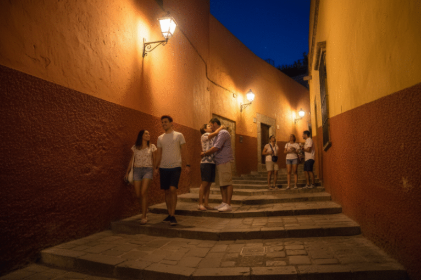
The Callejon del Beso in Guanajuato is one of those places that surprises people. At first glance, it looks like a narrow passage between two old buildings. But once you step inside, you realize it carries a story that has shaped its identity for generations. This alley is not famous for its length or design, but for the emotions and traditions tied to it.
Many travelers discover the history and visiting details through Callejon del Beso before arriving. When seen in person, the space feels intimate and intense, with walls so close that they force visitors to slow down and pay attention. That closeness is exactly what gave birth to the legend that made this place unforgettable.
A Story That Changed an Ordinary Street
Before the legend, this alley was simply part of Guanajuato’s dense colonial layout. Over time, a tragic love story became linked to it, turning the location into a cultural landmark. The story tells of a young woman from a strict household who fell in love with a man her family refused to accept.
Their homes faced each other across the narrow alley, allowing secret meetings from their balconies. When their relationship was discovered, the consequences were devastating. The tragedy left a permanent mark on the alley, transforming it into a symbol of love that defied control but paid a heavy price.
Why Visitors Feel a Strong Connection Here
What separates Callejon del Beso from other historic sites is how personal the experience feels. Glass, ropes, or barriers do not separate visitors. They stand exactly where the story is said to have unfolded.
Several details make the experience stand out:
- The extremely narrow space between the buildings
- Balconies that almost touch overhead
- Stone steps worn down by time and footsteps
- A quiet intensity despite the surrounding crowds
These elements work together to create an atmosphere that feels emotional rather than theatrical.
The Meaning Behind the Third Step
One of the most well-known traditions connected to the alley involves the third step. Couples who stand on this step and share a kiss are believed to receive years of happiness together. This belief has turned the alley into a popular stop for couples from around the world.
The ritual is simple, but it gives visitors a way to participate in the story instead of just listening to it. Even those visiting alone often pause on the steps, watching others and reflecting on the legend.
Visiting Experience and Crowd Expectations
The alley itself is short, and most visits last only a few minutes. However, the number of visitors can be high, especially during weekends and holidays. Because the space is narrow, people often take turns stepping onto the famous stairs for photos.
Common things visitors notice include:
- Limited room to move freely
- Lines forming for photos
- Local photographers offering keepsakes
- A lively atmosphere during peak hours
Comfortable shoes and patience make the visit much more enjoyable.
When Is the Best Time to Visit?
Timing plays a big role in the experience. Early mornings offer a calmer environment and better lighting. Late afternoons are also a good option, as crowds begin to thin out. Midday and weekends tend to be the busiest.
Exploring nearby streets before or after the visit helps balance the experience, as Guanajuato’s historic center is filled with colorful buildings and hidden corners.
Why This Alley Still Matters
The Callejon del Beso in Guanajuato is not just a romantic stop; it is a reminder of how stories shape places. Many alleys in the city are narrow, but only this one carries a legend that continues to connect people across cultures and generations.
It shows how memory and tradition can transform a simple space into a symbol recognized far beyond its physical boundaries.
Final Takeaway
The power of Callejon del Beso lies in its meaning, not its size. It offers visitors a moment to pause, imagine, and connect with a story that has survived for centuries. In a city full of history, this quiet alley stands out as a place where emotion, legend, and everyday life come together.