

Table of Contents
- Introduction
- Understanding Talent Pools
- Leveraging Internal Mobility
- Embracing AI and Automation
- Focusing on Diversity, Equity, and Inclusion
- Enhancing Employer Branding
- Utilizing the Contingent Workforce
- Implementing Data-Driven Strategies
- Conclusion
In today’s dynamic employment landscape, companies are finding that strategic talent pooling is no longer a luxury—it’s a necessity. The increasingly competitive talent market rewards organizations that adopt a forward-thinking approach to workforce planning. By proactively curating versatile talent pools, businesses ensure faster and more effective hiring, safeguarding their future agility in meeting changing workforce demands.
These talent pools are about much more than storing resumes; they revolve around nurturing engaged relationships with potential candidates and giving organizations a competitive edge. Talent pools that are diverse, data-driven, and well-branded help future-proof organizations as they respond to rapid industry changes and emerging business challenges.
Understanding Talent Pools
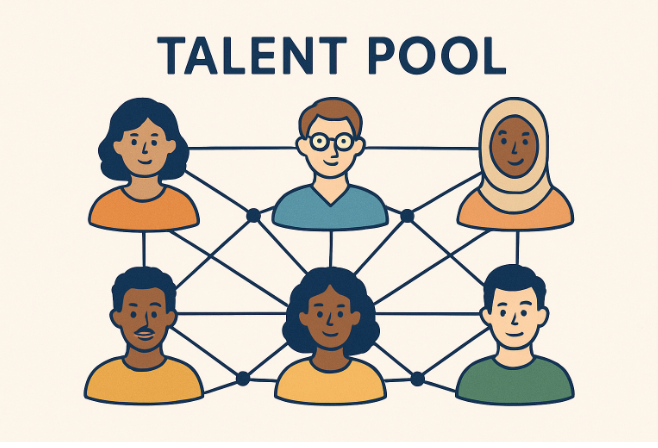
A talent pool is a curated database of individuals who have either expressed interest in working for the company or have been identified as fitting potential future roles. Rather than being a static repository, a successful pool involves ongoing engagement—keeping these candidates updated on company news, culture, and role developments, thus maintaining their interest over time.
Nurturing these relationships relies on consistent communication, regular opportunities for engagement such as webinars or events, and personalized content delivered to keep passive candidates warm. With global skill shortages, an active and well-managed talent pool offers a tremendous strategic advantage.
Leveraging Internal Mobility
A frequently underused talent resource lies within an organization’s own workforce. Enabling employees to transition into new roles internally not only reduces recruitment costs and onboarding time but also deepens employee engagement. Internal mobility programs are linked to higher retention and improved morale because employees see a clear path for advancement and skills development within the organization.
By tapping into internal talent, businesses can fill critical roles with candidates who are already aligned with their culture and values, while simultaneously preparing employees to acquire new skills that future-proof both the workforce and the organization.
Embracing AI and Automation
Artificial intelligence and automation are transforming recruitment and talent management. AI-powered systems can analyze candidate profiles, skills, and prior experience against job requirements, quickly surfacing top talent. Automated systems handle initial candidate outreach, interview scheduling, and communication, freeing up recruiters to focus on relationships and strategy.
Moreover, AI tools can help prevent bias in candidate selection and provide valuable analytics, such as predicting which passive candidates are most likely to respond to new opportunities. This technology-driven efficiency leads to better hiring decisions and a superior candidate experience.
Focusing on Diversity, Equity, and Inclusion
Modern talent pools thrive on diversity. Broadening the reach through partnerships with minority-focused organizations, leveraging inclusive job boards, and championing unconscious bias training are all effective DEI strategies. A diverse talent pool sparks innovation, enhances a company’s reputation, and provides it with a broader set of skills and perspectives to solve business challenges.
Organizations prioritizing DEI not only expand their candidate base but also signal to job seekers and the public that they value and uphold principles of fairness and representation in their hiring practices.
Enhancing Employer Branding
In today’s digital-first landscape, a company’s online presence plays a pivotal role in shaping candidate perceptions and attracting top talent. By showcasing authentic employee stories, highlighting company values, and offering a genuine glimpse into the workplace through social media and digital channels, companies can build trust and credibility with potential hires. A strong employer brand not only attracts high-potential candidates but also fosters engagement and retention by aligning expectations from the outset.
Positioning your organization as a great place to work resonates beyond recruitment—it strengthens brand loyalty, enhances customer confidence, and appeals to investors, ultimately supporting long-term business growth.
Utilizing the Contingent Workforce
The rise of the gig economy and flexible work arrangements has increased the availability of high-quality freelance and contract talent. Leveraging this contingent workforce enables companies to access specialized skills and respond promptly to workload peaks or unique project needs.
Agile organizations cultivate long-term relationships with top contractors and freelancers, many of whom may later transition into permanent roles, thereby enriching the talent pipeline with candidates already aligned with business objectives and processes.
Implementing Data-Driven Strategies
Workforce data is an indispensable tool for strategic talent planning. By leveraging analytics on past hiring cycles, employee productivity, and market labor data, organizations can identify gaps, anticipate skills shortages, and tailor their talent acquisition strategies accordingly. Advanced analytics also allow companies to measure the effectiveness of their talent pipeline and adapt to evolving workforce needs.
Conclusion
The future of hiring is rooted in a proactive and holistic approach to talent pooling—one that leverages technological innovation, nurtures diversity, strengthens internal mobility, and emphasizes employer branding. By implementing data-driven and inclusive strategies, organizations can build robust, adaptable talent pools that are capable of meeting the workforce’s challenges and opportunities ahead.
