

If you work on your own car, you’ve probably fought your garage lighting at some point. It’s usually fine when you’re just pulling in or grabbing something off a shelf, but the second you open the hood or get down low, it falls apart. The light’s there, just not where you need it.
A lot of that comes from how most garages are set up. One or two overhead fixtures, maybe centered, maybe not, and that’s supposed to cover everything. It lights the room in a general sense, but once you’re actually standing over the engine or working along the side, you start casting shadows right into the problem area.
So you adjust. You lean in, shift your head around, grab your phone light, maybe drag over a shop light if you have one. It works, but it slows everything down, and you’re still not seeing things as clearly as you could be.
The thing is, it’s not always about needing more light. It’s about getting it in the right spots. You can have a bright garage overall and still struggle to see what matters if everything’s coming from straight overhead.
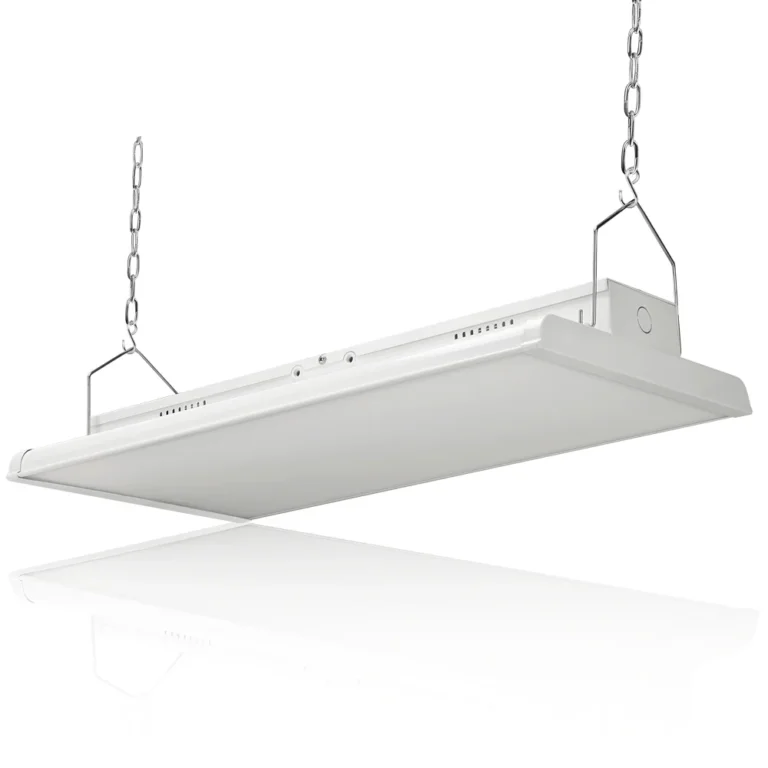
A better starting point is just evening things out. Instead of one central fixture, spreading light across the ceiling makes a big difference. Long LED strips or shop lights, the kind companies like Barrina or Hykolity put out, are popular for a reason. They’re simple, not that expensive, and they fill the space more evenly so you’re not working in patches of bright and dark.
This is also where lumens come into play, even if you don’t usually think about them. Most garages are underlit for actual work, so bumping things up helps. Somewhere in the range of 5,000 to 10,000 total lumens is usually enough to make the space feel clear without turning it into a spotlight. To see how many bulbs that means, check out this Lumens to Watts Conversion Chart from LightingGuide.org.
Once you’ve got decent coverage overhead, adding light from different angles is what really changes things. Side lighting helps a lot more than people expect. It brings out texture, shows small imperfections, and makes it easier to catch things you’d miss under flat lighting.
Then there’s the simple stuff that makes a big difference day to day. A portable or magnetic work light that you can stick under the hood or angle exactly where you need it saves a ton of time. You stop chasing the light and just focus on the work.
Color matters too, but it doesn’t need to get technical. If your garage lighting feels yellow and kind of muddy, it’s probably too warm. A more neutral white, somewhere in that middle range, tends to make everything easier to read without feeling harsh.
None of this is about making your garage look like a showroom unless you want it to. It’s just about making it easier to work in. Less squinting, less repositioning, fewer moments where you’re not totally sure what you’re looking at.
Once the lighting is right, you notice it pretty quickly. Things feel more straightforward. You spend less time adjusting and more time actually working on the car. It’s a small upgrade, but it makes the whole space feel a lot more usable.
